
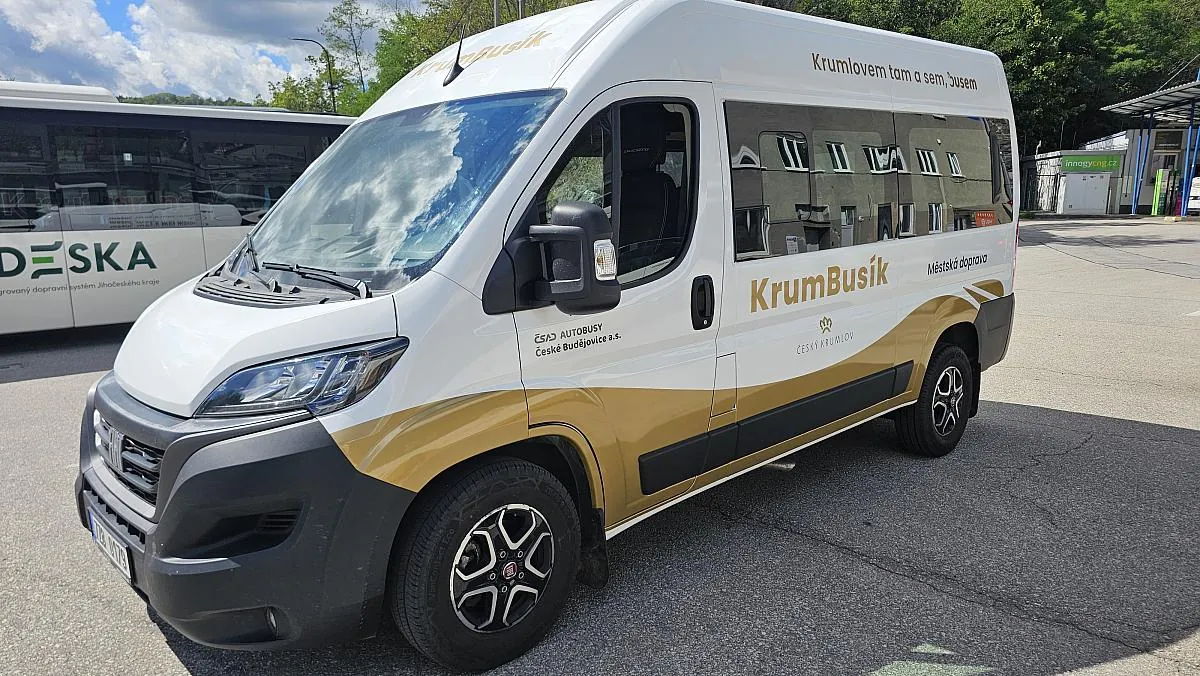
extended by 4 years
KrumBusík
Český Krumlov
Complements the town's buses where they do not go and at times when they do not run.
Demand responsive transport (DRT) is public transport that runs on bookings. It fills the network where a fixed route does not pay: in sparsely populated areas, in outlying parts of a town, early and late in the day, at night and on the way to trains and buses.
Fixed routes remain the backbone of the network. Where many people travel along the same route, a scheduled service pays. At peak times DRT can run semi-fixed: fixed departures to a timetable in the morning and afternoon, on request during the day.
The technology comes from CITYA, operations from a local operator, and the service brand and the operating data are yours.
The platform, the passenger and driver apps, dispatch, service set-up and operating data. CITYA does not run vehicles.
Vehicles and drivers. Your existing operator, or a vetted local partner we help you choose.
The town, municipality or transport authority decides the scope, the fares and the service brand. The app carries the name of your service. The operating data belong to you, and if you choose a new operator, the app, the brand and the data stay with you.
You buy two things separately: the technology and the operation. We prepare the documents for both.
A pilot can often be procured as a low-value contract. A longer service is competitively tendered, for example for several years at once.
You contract the operation separately with an operator and pay it for running the service. In England, the Department for Transport's best-practice guidance on DRT (December 2025) takes local authorities from planning and procurement through to launch and long-term operation. We help you choose the operator.
With transport authorities we work under framework agreements: one platform, with areas and municipalities joining step by step.
Several municipalities can share one service: one vehicle, one system and one app.
The costs have two parts. We discuss indicative costs for your area in a consultation; a study before launch sets the exact scope and costs.
A monthly CITYA fee for the platform: passenger and driver apps, dispatch, service set-up and operating data.
Payment to the operator for vehicles, drivers and service hours.
When a separate door-to-door service becomes part of DRT, its budget helps fund the new service.
Questions worth asking every platform supplier, us included. For each one we say how CITYA handles it.
Passengers should pay with the same tickets as on the bus, and trips should show up in journey planners.
CITYA DRT runs in the fares of the integrated system, season tickets included. We publish timetables, vehicle positions and trip status as GTFS and GTFS-Flex (open data for journey planners) and through a partner API. Our integrations include the IDS JMK and IDOL networks in the Czech Republic.
DRT should connect with trains and buses and complement them.
The CITYA allocator knows the trips of fixed routes, protects connections, avoids running in parallel with them and supports semi-fixed operation.
Older people and those without the app need an equal way to travel.
With CITYA a ride can be booked in the app, on the web and by phone through dispatch. The app works with screen readers.
People see a service with a local name as their own.
Every commissioning authority gets its own app from CITYA in the App Store and Google Play, with its own name, icon and colours.
The data show where from, where to and when people travel, and they are the basis for network planning.
With CITYA the data belong to the commissioning authority: in dashboards, reports and as raw data. If you choose a new operator, the app, the service brand and the data stay with you.
Some suppliers provide the technology, others a turnkey service with their own vehicles and drivers. Both models work; decide which one you want.
CITYA supplies the technology. Your existing operator drives, or a vetted local partner, and you can change operator without changing the app or the brand.
A simulation on data from your area shows the number of vehicles, waiting times and costs before you commission the service.
CITYA simulates the service on its allocator, the same algorithm that then runs the live service, and draws on five years of operating data.
The strongest reference is a service the commissioning authority extended or expanded after the pilot. Ask there directly.
After a one-year pilot, Český Krumlov extended KrumBusík by four years. The Liberec Region is extending TvůjBus from the pilot area to further areas. Moravská Třebová runs its entire town bus service on request.
The service processes passengers' personal data, and the commissioning authority needs a data processing agreement.
CITYA signs a data processing agreement under Article 28 GDPR and is ISO/IEC 27001 certified.
Roughly two to three months from assessment to the first ride, plus the time for approval on your side.
Assessment
We go through your network, data and goals.
2 weeks
Study and simulation
We show how the service would run: how many vehicles, at what times and at what cost.
2 weeks
Decision and procurement
Approval by your council or board, procurement of the technology and choice of operator (4 to 6 weeks). We prepare the documents.
Pilot
Platform, app and your own service brand. We help with communication to residents and in the first weeks of operation.
launch in 1 week
Evaluation
Operating data show where from, where to and when people travel. Stops, operating hours and the number of vehicles are adjusted accordingly.
Expansion
A longer contract, more areas and municipalities. The Liberec Region started with a pilot in one area and is extending it to others.
The CITYA platform runs in dozens of regions in five European countries. People have taken hundreds of thousands of rides with it.
extended by 4 years
Český Krumlov
Complements the town's buses where they do not go and at times when they do not run.
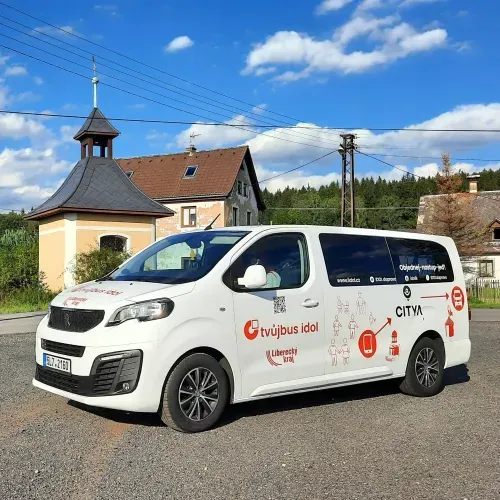
part of the regional network

Liberec Region
DRT run entirely by the regional transport authority, within IDOL fares.
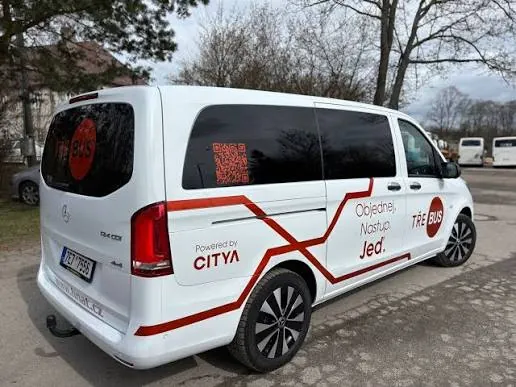
in its 3rd year
Moravská Třebová
The town replaced its own bus service with DRT and merged it with its door-to-door transport.